From the Hunt to the Table
A spring bear hunting story, field notes, and three of our favourite black bear recipes.
By Ryan Primus
April to June is Springtime in British Columbia. Winter has finally released its icy grip on the land, a warm spring breeze blows from the south, and the last of the snow begins to disappear. Grass starts pushing through the ground, black bears emerge from their dens, and bear season is officially open.
Unless you live where I do.
It's true that black bear season opens April 1st, but unfortunately, in my neck of the woods, heading out that early would be a complete waste of time. The bears may be starting to grow restless in their dens, and even if you're lucky enough to spot the odd one emerging, they'll be few and far between. Around Prince George, there will still be a foot of snow on the ground, no grass to be seen, and therefore, no bears grazing.
So I wait.
Impatiently, but wait I must, because the timing isn't right. I've grown restless from too many months since the fall season ended. I'm itching for a good reason to drive down a dead-end logging road, put some boots on the ground, sit in a cut block, listen to the birds, and take some much-needed time to clear my head of the noise that creeps in over the winter.
I love spring bear hunting for many reasons. Over the years, I've learned that having something to pursue gives me a deeper sense of purpose in the woods. As much as I enjoy being outside and walking through the forest, if I'm looking for something, the excitement goes up tenfold. That could be mushrooms or fiddleheads, but black bears in the spring are the ultimate prize.
The question I get most often is, "Do you eat them?"
Of course I do, and they taste great.
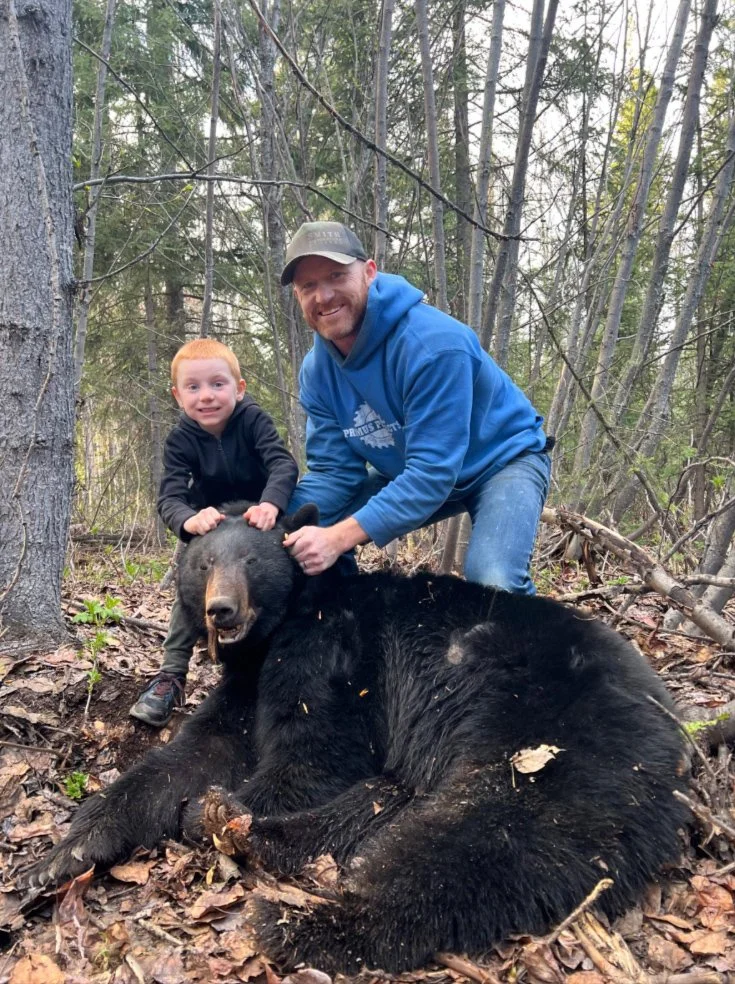
After a long winter, it's nice to top up the freezer months ahead of the fall hunting season. I used to turn an entire bear into sausage, but I've become a little more adventurous lately. These days it's sausage, of course, but also BBQ tenderloin, corned bear, bear ribs, adobada made from the shanks, and jerky from the backstraps.
Bear meat is arguably one of the best wild meats out there. Ask my kids…it's their favourite, ahead of elk, moose, deer, and anything else I harvested last fall. The fat content helps keep the meat moist, even when cooked to the recommended internal temperature of 160 degrees to eliminate trichinosis. And if you're lucky enough to harvest a spring bear with some fat left on it, you can render it into lard for cooking.
I was 22 when I shot my first black bear and 37 when I shot my second one.
My wife had no interest in the meat whatsoever, so I took it upon myself to show her what she was missing. It only took a couple of months and perhaps some less-than-honest representations of what we were having for dinner…before she finally admitted, "Yes, this is good. I do like black bear meat."
I haven't missed a spring bear hunt since.
When the weather finally warms up around the first week of May, I start paying attention to the grass along the roadsides. When the greenery starts to show up, that's when I start heading into the bush.Or, as a wise man once said: "Dandelions are out, the bears are out."
My go-to locations are cut blocks that are a couple of years old. Not brand new, because there won't be much growing there yet, but not so old that the trees have grown up and blocked all the visibility. I prefer south-facing slopes because they lose their snow sooner and green up earlier.
Another good option is simply driving old forest service roads and watching for bears grazing in the ditches.
One of the great things about bear hunting is that it can be as easy or as challenging as you want it to be. You can cover ground from a pickup truck or quad, or, if you crave adventure and don't mind putting in the work, you can head deep into the backcountry, away from the road hunters, in search of that pumpkin-headed trophy bear you've always dreamed about.
British Columbia's black bear population remains healthy, too, which means you rarely have to wait long before something interesting happens. So whether you're young or old, able-bodied or disadvantaged, casual or obsessed, bear hunting has something to offer everyone.
When the timing is right, grab your favourite firearm, fill up the thermos, jump in the truck, and go for a drive. Maybe you know exactly where you're headed. Maybe you just want to see where the road takes you. Once the rubber hits the gravel, roll down the window, breathe the fresh air, maybe a little road dust, and keep your eyes peeled.
Maybe you see a bear. Maybe you don't. Either way, it hardly matters.
We were made to be outdoors. The pursuit keeps us coming back, and the never-ending "what if" keeps us rounding the next corner and climbing the next ridge.
Just don't forget to slow down, take a deep breath, close your eyes, and remember:
It's a great day to be a hunter.
Corned Bear (or Venison)
By: Moose, Mushrooms, and Mud Wildcraft
Corning meat is a process of placing the meat in a brining solution for a period of time of 5-7 days, and then slow cooking the meat in water for 4-6 hours.
I like to use the hind quarters and shoulder roasts for corning. I will take the extra time to split some of the muscles apart and get any of the major veins and arteries out.
Ingredients
3 to 5 lbs of boneless bear meat. 2 quarts water1/2 cup canning, pickling salt, or kosher salt1/2 cup tender quick salt (this is a curing salt which contains nitrates and should not be substituted for food safety reasons, color and taste. A common brand is Morten Tender Quick)5-6 whole peppercorns or 1Tbsp cracked pepper2-3 tablespoons pickling spice2-3 tablespoons of minced garlic1 tsp. thyme leaves, dried (optional)1/2-1 tsp. crushed red pepper flakes (optional)
1 tsp crushed juniper berries (optional)
Directions
Bring the water, salts, and spices to a boil for a few minutes (all of the ingredients except the bear).
Remove from heat and allow to return to room temperature or colder. If you would like to cool down the brine faster, place the pot of brine in an ice bath.
Place the bear meat in a large Ziploc bag. Pour the cooled brining liquid over the bear meat to cover it. Remove air to make sure the meat is fully submerged, and seal Ziploc bag.
Place the bag on a plate or baking tray and place in the refrigerator for 5-7 days, turning the bag over with meat occasionally.
Remove the bear meat from the brine and freeze in a freezer bag for future meals or cook it in a large pot or Dutch oven by covering the meat with clean water and allowing it to simmer for 4-6 hours until tender. A crock pot works well for this also. If you plan to slice this for sandwiches, fully cool before slicing.
Ideas for uses of corned bear:
Have in Rueben Sandwiches (or other sandwiches)
Rueben Style Egg Rolls
Use in Eggs Benny
Corned Hash
Use in Cheesy Macaroni Casseroles
Slice thin and use on cheese and crackers or in other appys
Other recipes that uses corned meats
BEAR BARLEY SOUP
By: Moose, Mushrooms, and Mud Wildcraft
Such a great comfort soup!
2 pounds of bear meat cut into ¾-inch cubes
3-4 tablespoons olive oil, divided
2 large onions, diced
4 large carrots, chopped
3 stalks celery, chopped
2 cups of potatoes, chopped into 1-inch cubes
1 tablespoon of minced garlic
1 tsp dried oregano
½ tsp dried rosemary
1 tsp dried thyme
¼ cup tomato paste
1 tablespoon Worcestershire sauce
4 cups beef broth, beef stock, or venison stock (or even bear stock)
1 1/2 cups of diced white button or cremini mushrooms (or 1 1/2 cup of safe, edible wild mushrooms, like hedgehogs, king boletes, shaggy parasol)-optional
6 cups water
Salt and Pepper to taste
1 cup hulled barley
Directions:
Heat the olive oil in a large cast iron frying pan over Med-High heat. Add the bear to the pan and sear the cubes. After a few minutes, lower heat to low-med and cook the bear until cooked.
Heat an additional tablespoon of olive oil in a large soup pot set over medium heat. Add the onions, carrots, celery and cook for about 10 minutes.
After the vegetables have started to soften, add the cubed potatoes, minced garlic, oregano, rosemary, thyme, tomato paste, and Worcestershire sauce. Gently mix to combine.
Add the seared, cooked bear, being sure to scrape and add the all browned and stuck bits to the pot. Add the broth/stock, water, and barley (and mushrooms-optional). Mix well to combine and increase to high heat. Bring to a boil, then cover and reduce the heat to medium-low. Add bay leaves. Simmer for at least 1 hour, stirring occasionally.
Once the vegetables are soft and the bear and barley is tender, remove from heat and season with salt and pepper to taste.
Note: if you are not using hulled barley, cook barley separately before hand, rinse, and add to soup pot when simmering the bear meat with broth and spices.
Black Bear and Mushroom Stroganoff
By: Moose, Mushrooms, and Mud Wildcraft
1 ½ lbs. of bear meat, cut into 3/4in cubes
2 medium onions
6 cups of beef, venison, or bear broth
1 cup sour cream
2 tsp of garlic powder
A few dashes of Worcestershire Sauce
1 tsp pepper
Salt to taste
½ cup butter
½ cup Flour
1 ½ cup sour cream
1 cup diced white or cremini mushrooms mushrooms (or 1 cup of safe, edible wild mushrooms, like hedgehogs, king boletes, or shaggy manes)
1/2 cup frozen peas
1lb of dried pasta
Serves 4-6
Directions:
Approximately 1.5 hours before you want dinner served, start your bear meat by adding bear meat to a pot. Add the 6 cups of broth and bring it to a soft boil and cook, covered, until meat is tender. This can take anywhere between 1-1.5 hours (Note: you can also add your bear meat to a crock pot (covered), add 6 cups of beef/venison/bear broth and put on low for 5-6 hours. This will soften your meat, while adding extra flavor to your broth). Your bear meat should be melt in your mouth soft.
When your meat is tender, strain your meat out from the broth. Reserve the broth and top up with extra broth or water to achieve 6 cups again (evaporation may have occurred and you may need to top your broth back up to 6 cups). Set meat and broth aside.
Add 2TBSP of Olive oil to a 12 inch cast iron frying pan. While heating on medium low, dice the onions and add them to the heated frying pan. Sauté until soft. Set aside onions with the meat.
In the same cast iron frying pan, add the butter and melt on medium heat. Once melted, add flour to make a rue. While stirring, cook butter and flour for 2 min. Add 6 cups of broth. Heat on medium high heat until rue mixture has thickened. Once thickened, add pepper, garlic powder, and a few dashes of Worchester sauce. Add sour cream. Mix well.
Add mushrooms, bear, and onions.
On low, lightly simmer the sauce for 15-20minutes to allow all the flavors to develop and for the mushrooms to be fully cooked. Stir occasionally. Be sure not to let the bottom burn.
While the Stroganoff sauce is simmering, make your pasta.
When stroganoff mixture is almost done, stir in frozen peas to the stroganoff mixture and further cook for 5 min. While cooking, taste your sauce and add salt to desired taste. Turn off stove-top when peas are completely thawed and hot in the stroganoff mixture.
Strain pasta when done and add a splash of Olive oil to the pasta and mix well.
Plate desired amount of pasta on a plate and place Stroganoff Sauce over top.
Enjoy!